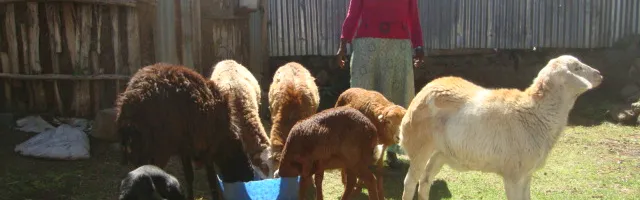
Supporting communities affected by conflict and crisis with livelihood and food security interventions.
Active Emergency Projects
| Project | Location | Status |
|---|---|---|
|
folder
Abergele Post conflict recovery
Supporting post-conflict recovery through livelihood restoration and food security.
|
location_on
Abergele Woreda
|
Active |
|
folder
CCO
Community Cash-for-Work program supporting livelihood recovery.
|
location_on
Tigray Region
|
Active |
|
folder
Seed Provision
Providing quality seeds and agricultural inputs to restore farming livelihoods.
|
location_on
Multiple Woredas
|
Active |
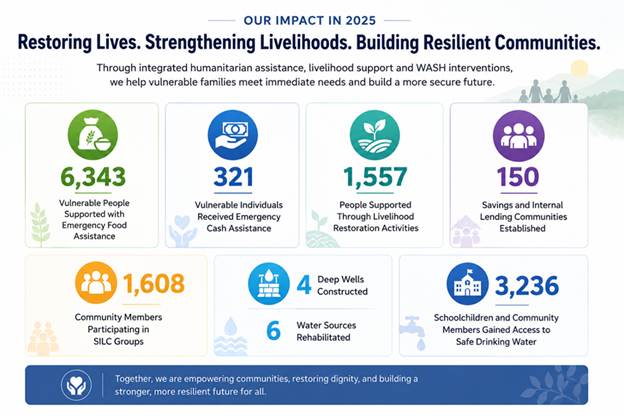
The Daughters of Charity support vulnerable communities affected by conflict, displacement, poverty, and climate-related shocks through integrated humanitarian assistance, livelihood restoration, food security, and WASH interventions. Our approach combines emergency response with long-term recovery efforts, helping families meet immediate needs while building resilience and self-reliance.
Emergency Assistance and Food Security
We provide emergency food assistance, improved agricultural inputs, and essential support to vulnerable households, internally displaced persons (IDPs), women, children, and other at-risk groups. These interventions help reduce food insecurity, improve nutrition, and protect lives during times of crisis.
Livelihood Recovery and Economic Empowerment
To support recovery and self-reliance, we help vulnerable households restore and diversify their livelihoods through small business support, vocational training, agricultural activities, and financial inclusion initiatives. Special attention is given to women and conflict-affected families to strengthen economic resilience and promote sustainable income generation.
Through Savings and Internal Lending Communities (SILC), community members are empowered to save, access financial services, and support one another in building stronger and more sustainable livelihoods.
Water, Sanitation and Hygiene (WASH)
We improve access to safe and clean water through the construction and rehabilitation of water supply systems and by strengthening community-based management structures. These interventions contribute to improved health, reduced waterborne diseases, and enhanced wellbeing for schools and surrounding communities.